Introduction
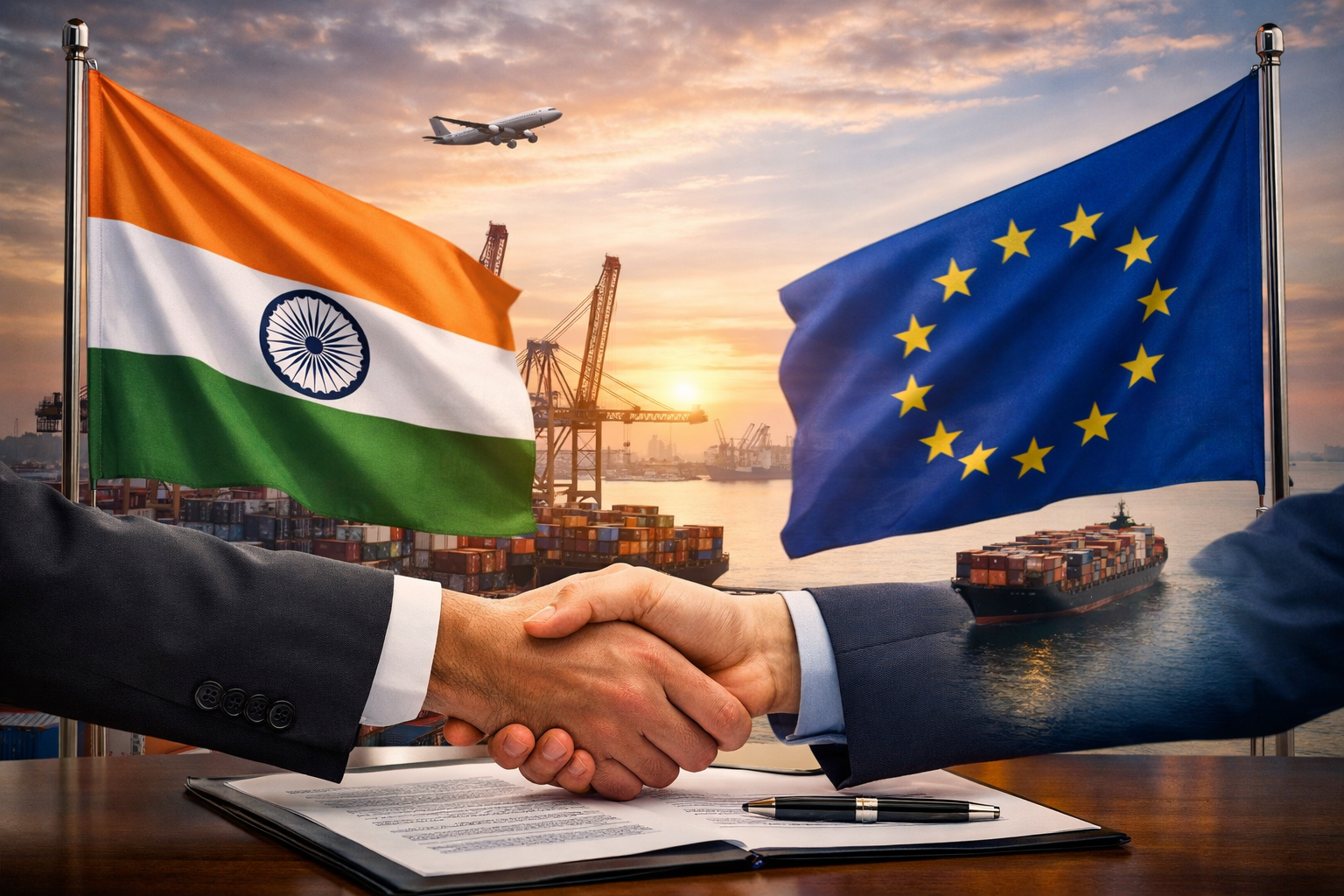
India and the European Union are currently engaged in advanced negotiations for a comprehensive Free Trade Agreement (FTA), widely described by policymakers and trade experts as the “Mother of All Deals.” Once concluded, this agreement is expected to redefine trade, investment, and supply chain linkages between two of the world’s largest economic blocs.
The proposed India - EU FTA is not just a tariff-reduction pact. It is a deep, wide-ranging trade framework covering goods, services, investments, sustainability, digital trade, and regulatory cooperation.
Why the India - EU Deal Matters
The European Union is one of India’s largest trading partners, while India is a key strategic market for the EU in Asia. Together, India and the EU represent a market of over 1.8 billion people and a combined economic output exceeding USD 20 trillion.
For India, the deal offers expanded access to high-value European markets. For the EU, it provides a stable, long-term trade partner at a time when global supply chains are being restructured.
This agreement is being negotiated at a time when both sides are actively seeking to reduce dependence on single-country supply chains and strengthen resilient, rules-based trade.
Key Areas Under Negotiation
The India - EU FTA discussions cover multiple critical areas that go beyond traditional trade agreements.
In goods trade, the focus is on reducing customs duties for industrial products, engineering goods, chemicals, pharmaceuticals, textiles, apparel, leather products, and automobiles. India is seeking better access for labor-intensive exports, while the EU is pushing for lower tariffs on high-value manufactured goods.
In services, negotiations include IT services, professional services, financial services, logistics, shipping, and maritime-related services. This is particularly relevant for India’s service-driven economy and Europe’s advanced logistics and shipping ecosystem.
Investment protection and ease of doing business are also central themes. The agreement aims to create a predictable investment environment by addressing dispute resolution mechanisms, market access rules, and regulatory transparency.
Sustainability and environmental standards form a unique and sensitive part of the talks. The EU is emphasizing climate commitments, carbon regulations, and responsible supply chains, while India is seeking flexibility and fairness aligned with its development priorities.
Impact on Shipping, Logistics, and Ports
For the shipping and logistics sector, the India - EU FTA could be transformational.
Reduced trade barriers are expected to increase cargo volumes between Indian ports and European destinations. This would directly benefit container shipping, bulk cargo movement, port operators, freight forwarders, and customs brokers.
Ports such as Mundra are likely to see increased export and import activity, especially in engineering goods, textiles, chemicals, ceramics, pharmaceuticals, and agri-based products. Improved trade predictability could also encourage long-term shipping contracts and better freight planning.
Logistics companies may benefit from clearer regulations, enhanced service access, and increased demand for end-to-end supply chain solutions connecting Indian exporters to European buyers.
Challenges and Sensitivities
Despite strong political intent, negotiations remain complex.
India is cautious about opening sensitive sectors too quickly, while the EU is firm on sustainability norms, labor standards, and carbon-related measures. Differences in regulatory approaches, data protection rules, and agricultural market access continue to require careful balancing.
However, both sides recognize the strategic importance of the agreement and have shown willingness to bridge gaps through phased implementation and safeguard mechanisms.
Strategic Timing in a Changing Global Trade Order
The India - EU FTA is being negotiated against the backdrop of global trade realignments, geopolitical uncertainty, and slowing multilateral trade negotiations.
For India, the deal supports its long-term export growth strategy and ambition to become a global manufacturing and logistics hub. For the EU, it strengthens economic engagement with a fast-growing, democratic economy in Asia.
This strategic convergence is why the agreement is being described as the “Mother of All Deals.”
Conclusion
The India - EU Free Trade Agreement has the potential to reshape trade flows, boost exports, attract investment, and create new opportunities across shipping, logistics, and global supply chains.
While negotiations are still ongoing, momentum remains strong. Once finalized, the deal is expected to set a new benchmark for comprehensive, future-ready trade agreements and significantly enhance India–EU economic cooperation for decades to come.