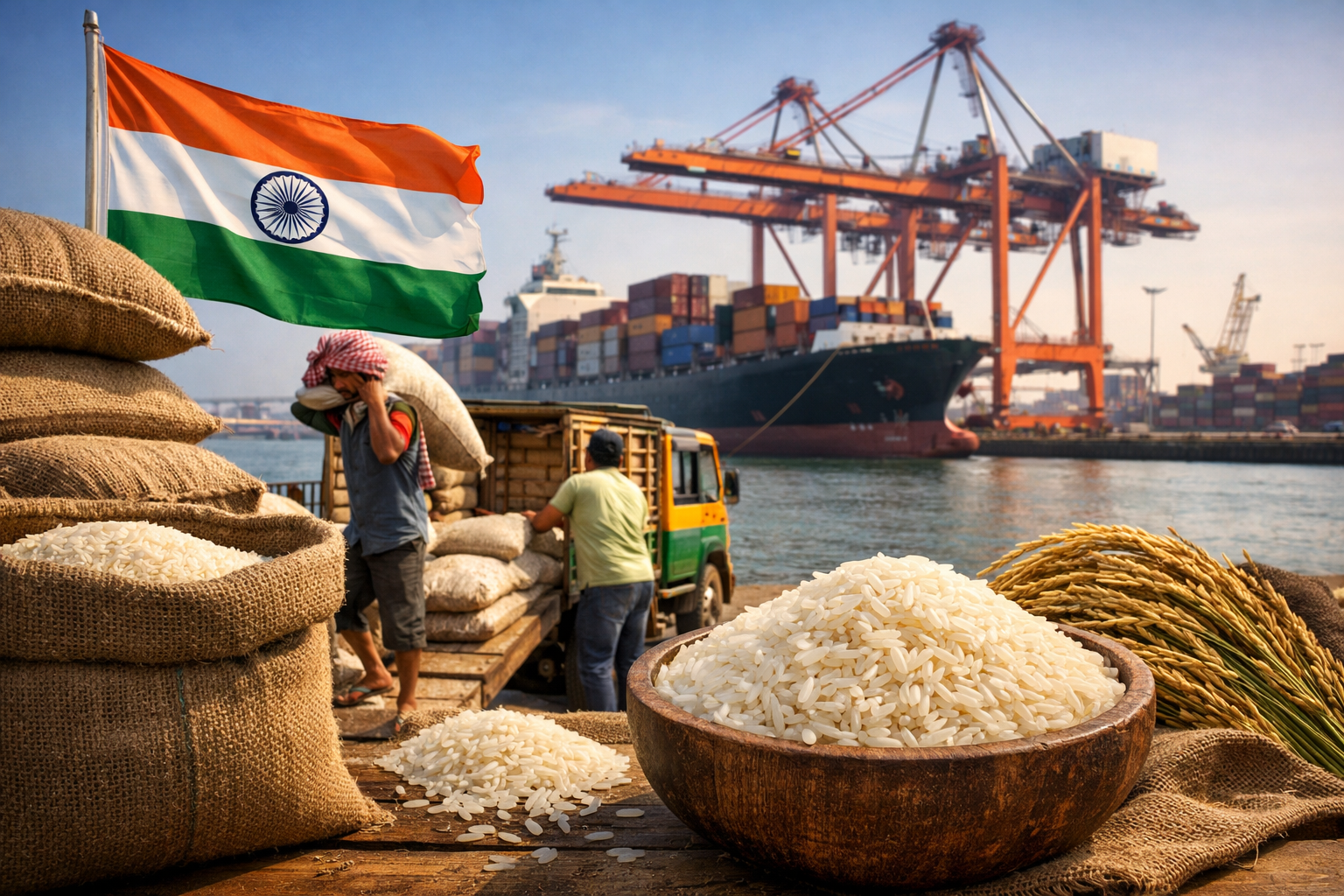
Over the past quarter, Indian rice exports have remained a key driver of agricultural trade, reflecting resilience amid global uncertainties and shifting demand patterns.
Strong Export Growth Continues
India has sustained its position as the world’s largest rice exporter, with export volumes and values climbing year-on-year. After the government relaxed export curbs, shipments surged sharply in 2025, with total rice exports rising nearly 20% to around 21.5 million tonnes, one of the highest levels on record. This surge is driven by both non-Basmati and premium Basmati rice across markets in Africa, the Middle East, and beyond.
Despite the strong overall performance, recent developments have caused some disruption:
Market Dynamics & Competitiveness
Outlook
While geopolitical and payment issues in select markets pose short-term challenges, India’s rice export sector continues to show robust growth and adaptability, underpinned by large crop yields and strong global demand for both premium and staple rice varieties.
Export Challenges Emerge
Exports to Iran, traditionally one of India’s biggest buyers of premium Basmati rice, have slowed significantly due to protests and payment bottlenecks, leaving nearly ?2,000 crore worth of export payments pending and dampening demand in the short term.
-
Traders have also noted cautious contract activity with Iranian buyers because of broader geopolitical uncertainties and potential trade barriers.
Indian rice remains competitively priced in global markets - especially non-Basmati staples - helping drive demand in Africa and South Asia as food security concerns grow. Post-restriction shipments have expanded to destinations that prioritize stable supply and competitive pricing.